Thursday, 22 June 2017

High Temperature Hits UK, Melts Roads 

High Temperature Hits UK, Melts Roads

The UK has started feeling the effects of heat following a surge in temperature reaching 104F (40C), causing discomfort to people and melting roads.


Gritters were deployed to shore up failing roads as temperatures hits the peak, destroying them.


Cambridgeshire County Council took the decision to deploy the vehicles after motorists complained that their tyres had started ‘ripping the tarmac off the roads.’


Drivers have been warned by police to take care on the B1165 near Newton in Cambridgeshire, where the tarmac has melted, and Agnes Owen, who works at a service station nearby, said that it “sounded like cars were driving on water”.


Evan Laughlin, from Cambridgeshire County Council, said gritters had been used to distribute granite dust to stabilise the road surface and stop bitumen becoming stuck on wheels.


“Normally the roads stand the summer temperatures we get, but just this week it’s very hot,” she said.


Motorists in Tarleton, Lancashire also discovered tar on their wheels as the roads melted, while some commuters in Croydon refused to use trams after noticing the track appeared to be disintegrating.


Transport for London said they had thrown sand down to help protect the rails. 


Rory O’Neill, TfL’s Director for London Trams, said: “The flexible sealant near the track has been softened by the current hot weather and although it is having no impact on the safe running of the tram network, we appreciate it may look concerning to customers. “Our engineers are on site and, as is standard procedure, they are applying sand to mitigate the effect of the heat.”


Elsewhere, pupils were sent home from a school in East Yorkshire after refusing to wear blazers as temperatures soared past 86F (30C). Kingswood Academy in Hull said the children were defiant over their uniforms, but parents complained that teachers had put their health at risk.


Allergy charities also warned that the hot weather could trigger fatal attacks and said sufferers should stay away from rural areas and avoid leaving windows open at night and early in the morning when pollen counts were at their highest.

Wednesday, 21 June 2017

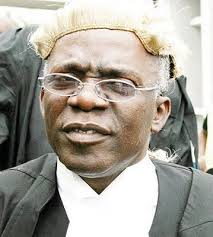
Court dismisses Falana’s suit against National Assembly

Court dismisses Falana’s suit against National Assembly

A Federal High Court in Abuja has dismissed a suit brought before it by a Human Rights Lawyer, Femi Falana (SAN) challenging the National Assembly’s “unconstitutional jumbo salaries and allowances paid to its members.”
The Senate, House of Representatives, Revenue Mobilisation Allocation and Fiscal Commission, Attorney General of the Federation (AGF) and the Accountant General of the Federation are the defendants in the suit.
The Chief Judge of the Federal High Court, Ibrahim Auta, in his judgment on Tuesday held that Falana lacks the ‘locus standi’ to institute the action.
The Judge said the suit did not disclose any reasonable cause of action and added that the action was “speculative, hypothetical, academic and moot” because the plaintiff did not establish how the action of the National Assembly had affected him personally.
Justice Auta held that the third defendant (Revenue Mobilisation Allocation and fiscal Commission) is the ideal institution to institute such action, pointing out that, “Locus is a constitutional issue; the trite law does not bestow the right to institute this suit by the plaintiff.
“This is not an issue around fundamental rights violation; the fact that he is a legal practitioner does not confer him the locus,” the judge said and added that the plaintiff must prove how he has been affected by the allowances of the Nigerian legislators.
“He must show by way of affidavit evidence, how the increase in the salaries and allowances of the Senators and House of Representatives members has negatively affected him.
“The interest of the plaintiff must be tangible, real in law and not a caricature that stems from personal aggrandisement; the suit is therefore dismissed for lacking in merit,” Justice Auta held.
Counsel the Senate and the House of Representatives, Kenneth Ikonne (SAN) had prayed the court to dismiss the suit on the grounds of incompetence and abuse of court process.
He argued that Falana had no locus standi to institute the suit, adding that the court was bereft of jurisdiction to entertain the case and urged the court to hold that the plaintiff is nothing but a “meddlesome interloper.”
Falana had in 2011 approached the court claiming that the National Assembly lacks the powers to increase salaries and allowances of its members.
He asked the court to declare unconstitutional, the allowances provided for the members in the Appropriation Act, 2010.
The plaintiff further asked the court to order the lawmakers to refund to the treasury all unauthorised salaries and allowances received by them since May 29, 2007.
He asked the Court to determine whether the Senators and members of the House are entitled to receive salaries and allowances not determined by the Revenue Mobilsation and Fiscal Allocation Commission pursuant to Section 70 of the Constitution.
Falana further prayed the Court to determine whether the Senate and the House are competent to determine the salaries and allowances of the members of the National Assembly.

Travel Ban: US Court Clears Way For Internal Vetting

Travel Ban: US Court Clears Way For Internal Vetting


The U.S. Ninth Circuit Court has formally cleared the way for President Donald Trump’s executive order on travel restrictions to move forward, but with a proviso that there will have to be internal reviews and vetting procedures of other countries for visa applications.
Transportation Secretary John Kelly has termed it as a “big win”, the CNN reported.
Legal experts, however, cautioned that this “win” for the administration may have an unintended practical effect.
This part of the ruling “was not narrowly tailored to addressing only the harms alleged,” the 9th Circuit panel explained. “
Last week, a three-judge panel on the Ninth Circuit Court of Appeals affirmed a lower court’s decision to halt the core provisions of President Donald Trump’s revised executive order that attempted to limit travel from six predominately Muslim countries and block refugees.
The Justice Department has requested the Ninth Circuit Court of Appeals for a speedy mandate to make its decision from June 12 take effect immediately — a request the court granted Monday, thereby specifically allowing the vetting portions of the executive order to proceed now.
Trump on March 6th signed an executive order ordering new travel restrictions for residents of six Muslim-majority countries as well as a temporary ban on refugees from around the world. This directive comes after Trump’s original executive order was rebuked in the federal courts.
The new ban, which was earlier to be implemented from March 16, halts travel for 90 days for residents of Iran, Libya, Somalia, Sudan, Syria and Yemen. The refugee suspension will last for 120 days.

Thursday, 8 June 2017

British PM loses majority, faces pressure to resign

British PM loses majority, faces pressure to resign


British Prime Minister Theresa May faced pressure to resign on Friday after losing her parliamentary majority, plunging the country into uncertainty as Brexit talks loom.

The pound fell sharply amid fears the Conservative leader will be unable to form a government and could even be forced out of office after a troubled campaign overshadowed by two terror attacks.

After being re-elected with an increased majority in the London commuter seat of Maidenhead, May said Britain “needs a period of stability” as it prepares for the complicated process of withdrawing from the European Union.

She said that while the full results had yet to emerge, her party seemed to have won the most seats and “it would be incumbent on us to ensure we have that period of stability”.

But Leftist opposition leader Jeremy Corbyn, whose Labour party surged from 20 points behind, urged May to quit, saying she had “lost votes, lost support and lost confidence”.

Former Conservative minister Anna Soubry, who just held onto her seat, said May was “in a very difficult place” following a “dreadful campaign”.

With a handful of seats still to be declared, the Conservatives were predicted to win 319 seats, down from 331 in 2015 — yet another upset in a turbulent year since the EU referendum in June 2016.

They were mathematically unable to reach the 326 mark that would give them a majority, meaning they will have to form an informal or formal alliance to forward their agenda.

Labour are expected to increase their share from 229 to 260 seats, resulting in a hung parliament.

May, a 60-year-old vicar’s daughter, is now facing questions over her judgement in calling the election three years early and risking her party’s slim but stable majority of 17.

“It is exactly the opposite of why she held the election and she then has to go and negotiate Brexit in that weakened position,” said Professor Tony Travers of the London School of Economics.

Sterling fell nearly two percent against the dollar on the back of the exit poll, as investors questioned who was now going to control the Brexit process.

Early newspaper editions reflected the drama, with headlines such as “Britain on a knife edge”, “Mayhem” and “Hanging by a thread”.

In a night that threatened to redraw the political landscape once again, the UK Independence Party (UKIP), which won 12.5 percent of the vote two years ago and was a driving force behind the Brexit vote, was all but wiped out, hovering around two percent.

The pro-European Liberal Democrats, who have campaigned for a second EU referendum, increased their number of seats from nine, but their former leader Nick Clegg lost his seat.

Meanwhile the Scottish National Party of First Minister Nicola Sturgeon, which has dominated politics north of the border for a decade and called for a new independence vote after Brexit, was tipped to lose around 21 of its 54 seats.

Deputy leader Angus Robertson, one of the strongest SNP performers in the House of Commons, was an early casualty.

– ‘Pressure to resign’ –

May, who took over after last year’s Brexit referendum, began the formal two-year process of leaving the EU on March 29, promising to take Britain out of the single market and cut immigration.

Seeking to capitalise on sky-high popularity ratings, she called the election a few weeks later, urging voters to give her a stronger mandate to go into Brexit talks that are expected to begin as early as June 19.

Officials in Brussels were hopeful the election would allow her to make compromises, but this has been thrown into question by the prospect of a hung parliament.

“It creates another layer of uncertainty ahead of the Brexit negotiations,” said Craig Erlam, senior market analyst at OANDA currency traders.

Despite campaigning against Brexit, Labour has accepted the result but promised to avoid a “hard Brexit”, focusing on maintaining economic ties with the bloc.

Barely a month ago, the centre-left party seemed doomed to lose the election, plagued by internal divisions over its direction under veteran socialist Corbyn.

But May’s botched announcement of a reform in funding for elderly care, a strong grassroots campaign by Corbyn and the terror attacks, which increased scrutiny of her time as interior minister, changed the game.

“Even if she manages to get just enough seats it will be seen as a failure and she may indeed be under pressure to resign as leader quite quickly,” said Paula Surridge, senior lecturer at the University of Bristol.

AFP

Saturday, 27 May 2017

Justice Ofili-Ajumogobia Owes Me N18m, Refuses To Pay Back – Witness

Justice Ofili-Ajumogobia Owes Me N18m, Refuses To Pay Back – Witness


A prosecution witness in the ongoing trial of suspended judge of the Federal High Court, Justice Rita Ofili Ajumogobia Friday told a Lagos State High Court in Ikeja that the judge stopped picking his calls after she borrowed N18 million from him to buy a property in the UK.
The witness, Dr Gregory Ero, who is the founder, Chief Executive Officer of Arkleel Oil and Gas told the court that the embattled judge despite promising to repay the money refused to do so and after sometime stopped picking his calls.
The Economic and Financial Crimes Commission (EFCC) had arraigned Justice Ofili-Ajumogobia and a Senior Advocate of Nigeria, Godwin Obla before the court on a 30-count charge of conspiracy to pervert justice by allegedly giving and receiving a bribe of N5 million.
The anti-graft agency had also alleged that about $793,800 passed through the Justice Ajumogobia’s domiciliary accounts with Access Bank between 2012 and 2015 and that she allegedly used the money to buy a house in London.
Five of the charges are centered on an alleged N5m bribe given to the judge by the senior advocate while the remaining 26 charges are on the huge amounts that passed through the accounts of Ofili-Ajumogobia and her alleged inability to explain her source of wealth.
The other charges filed against the judge border on forgery, lying, unlawful enrichment and other related offenses.
They both pleaded not guilty to the charge.
Ero who was the ninth prosecution witness in the case claimed, “I knew Ajumogobia sometimes in 2002 before she became a Federal High Court Judge. She was employed when we outsourced for a secretary.
“She was paid ad hoc fees as we did not have a regular structure as at then. She worked with us for two years before she was appointed as a Judge.
“She came to our office one day after she stopped working with us and sought to have a private audience with me. I obliged and she asked for a loan of N18 million because she had pressing needs.
“I enquired what the urgency was about and Ajumogobia told me that she had a shortfall of N18m for a property she wanted to buy in the UK as she needed to move out of the family house immediately.
“As a Christian I obliged her request and also based on the fact that she is known to me. She went further to tell me that she has properties which would generate rent while also giving me a payment plan for the repayment of the loan.
“Sadly after a year she did not pay back. I started calling her and she would pick my call. But between 2012 and 2013 she stopped picking my calls.
“I personally went to her house but I was turned back at the gate when I was informed that she was not around. I went to her house more than twenty times but I was always turned back at the gate.
“I am disappointed in Ajumogobia as I find her actions bizarre. Up till now, she has refused to pay me my money. I still need my money as the money was taken from our retail earnings. I have not written it off, I still need my money,” he said.
Also during Friday’s proceedings, a Deputy Comptroller General of Customs, Tahir Audu Musa also told the court that the Comptroller General of Customs Abdullai Dikko Inde gave him a slip of paper which contained the name, Nigel and Colive, a company owned by Ajumogobia.
“The DG sometimes in 2014 called me back and gave me the name of the company directing me to tell one Musa Omale to liase with some area comptrollers and transfer 1 million each to Omale’s account for onward transfer to the company’s account.
” The Customs Commands mentioned are: Apapa, Tincan Island, Kirikiri Landing Terminal, Murtala Mohammed, Federal and Sea, Onne Air and Ogun State Command, Tahir said.
The witness however said that he did not know why the money was paid into Nigel and Colive’s account.
The trial judge, Justice Hakeem Oshodi has adjourned the matter rill June 1 for further hearing.

U.S. Ambassador Unveils First State-Of-The Art American Space In Nigeria

U.S. Ambassador Unveils First State-Of-The Art American Space In Nigeria

U.S. Ambassador Unveils First State-Of-The Art American Space In Nigeria
The United States Ambassador to Nigeria Mr. W. Stuart Symington yesterday unveiled Nigeria’s first state-of-the art Priority American Space hosted at the Yaba offices of technology incubator, Co-Creation Hub (CC-Hub).
At the event attended by technology leaders, Ambassador Symington explained that the space, which is equipped with cutting-edge digital technology, is a center for Nigerians to develop innovative ideas, learn about the United States and its people, explore possible study at U.S. universities, enjoy U.S. cultural programs and also interact with U.S. exchange program alumni.
“At the Priority American Space in Lagos, we are investing in technology and programs to unleash the creativity of Nigeria’s burgeoning community of innovators. We are pleased to partner with Co-Creation Hub, a leading force for incubating social entrepreneurship and technological advancement,” Symington said.
The Centre, now open to the members of the public, comprises a Maker Space –– a tech area designed to promote digital skill building; a workshop space equipped with the latest laptops and tablets for internet learning; a conversation space for small group meetings and research and a meeting space that supports innovation and creative collaboration.
With a rich array of programs and trainings, the Priority American Space which is the tenth of its sort in Africa, will promote ingenious ideas, critical thinking and reasoned discourse.
It was learnt that there are 67 Priority American Spaces Worldwide.

Burundi Forces Unwed Couples To Marry

Burundi Forces Unwed Couples To Marry


Unmarried couples have until the end of the year to legalise their relationships, the Burundi government said Friday, as part of an effort to reform morals in the country.

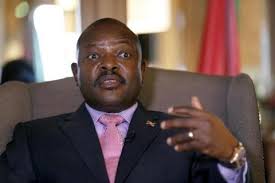
The order follows the launch of a campaign this month by President Pierre Nkurunziza “to moralise society” in the tiny nation which for two years has been in the grip of sometimes violent political upheaval.

Interior ministry spokesman Terence Ntahiraja told AFP the country was facing a population explosion which he blamed on “illegal marriages”, polygamy, bigamy and “hundreds of schoolgirls getting pregnant”


He said church and state-sanctioned weddings were the solution and were a patriotic duty.


Nkurunziza said Burundians should show their love for each other — and their country — by getting married.
The government has since been pressuring unwed couples across the country to tie the knot.
The governor of the southeastern province of Rutana has ordered that “persons living in common-law unions” should be put on a special list by 22 June, while the governor of the northwestern Bubanza province has demanded unspecified “sanctions” against aisle-dodgers.
Pierre, a 27-year-old farmer living with his partner in Ngozi, in the north, said local officials had threatened him with a 50,000 Burundian franc ($25/22 euro) fine and said any child born out of wedlock would not be eligible for free education and medical costs.
Pierre said he had not married because he could not afford the bride price demanded by his girlfriend’s family.
“She told me she was pregnant. As I am poor, we decided to come together to raise our child,” he said. “We thought we would legalise our union as soon as we could afford it.”
That was five years ago and the couple is now onto their third child.
To enact the president’s orders, officials have begun organising mass weddings, something one civil society activist opposed as “a violation of human rights because the state has no right to attack two adults who have decided to live together without being married.”
The activist said the forced marriages were part of a “religious crusade” led by Nkurunziza and his wife, both fervent, born-again evangelical Christians.
Spokesman Ntahiraja dismissed such arguments saying the government’s campaign was within the law.
“We want Burundians to understand that everyone is responsible for his life, we want order in this country,” he said.
“All this is done within the framework of the patriotic training programme,” he added, referring to an initiative launched by Nkurunziza in August 2013 to reinforce “positive traditional values.”
Since 2015, when Nkurunziza ran for a controversial third term, at least 500 people have been killed in political violence while around 400,000 have fled Burundi for refugee camps in neighbouring countries.